A Guide to Early Math Learning: A Complete Path from Number Sense to Math Competitions
Published: 10/03/2026
Many parents think preschool math is just:
❌ Memorising number bonds (9+1=10, 8+2=10 .........)❌ Fast calculations❌ Doing lots of practice questions
❌ Memorising Times Tables
But what really shapes a child’s future maths ability isn’t how fast they calculate, but how well they understand.
In fact, children learn maths very differently across education systems.
🤔 Why don’t many students overseas memorise their times tables?🤔 Why are some children not quick at calculations, yet so strong at maths?
The answer lies in one important difference:
Arithmetic Skills vs. Mathematical Thinking
🧠 Arithmetic Thinking vs Mathematical Thinking
Many traditional teaching methods focus on arithmetic skills:
- Memorise number bonds to 10 (9+1=10, 8+2=10 .........)
- Practise calculating faster
- Repetitive worksheets
- Memorising Times Tables
But true mathematical thinking focuses more on:
✔️ Understand number relationships✔️ Spot patterns✔️ Solve problems from different angles
For example:
Traditional arithmetic
- Children memorize:
- Friends of 10
- Multiplication tables
Mathematical thinking
Children will understand:
Related Facts(Related Equations)
For example:
3 + 2 = 5
Children also understand:
- 2 + 3 = 5
- 5 − 2 = 3
- 5 − 3 = 2
Learn 4 number relationships in one go.
🔍 3-Minute Quiz: Is Your Child Learning Maths, or Just Doing Sums?
Many children can:
✔️ Multi-digit addition and subtraction✔️ Regrouping
But what if we ask it another way:
Turn
2 + 3 = ?
Becomes:
❓ ? + 3 = 5❓ 2 + 3 = 3 + ?❓ 2 + 13 = ?
If your child suddenly can’t solve a question, it may mean they’ve only memorised the method without truly understanding the maths concept.
This is also why many children become more afraid of maths as they move up through the grades.
🔢 Maths for young children should start with “number sense”
A genuine introduction to maths for young children should start with the fundamentals of number sense.
For example:
Number Sense
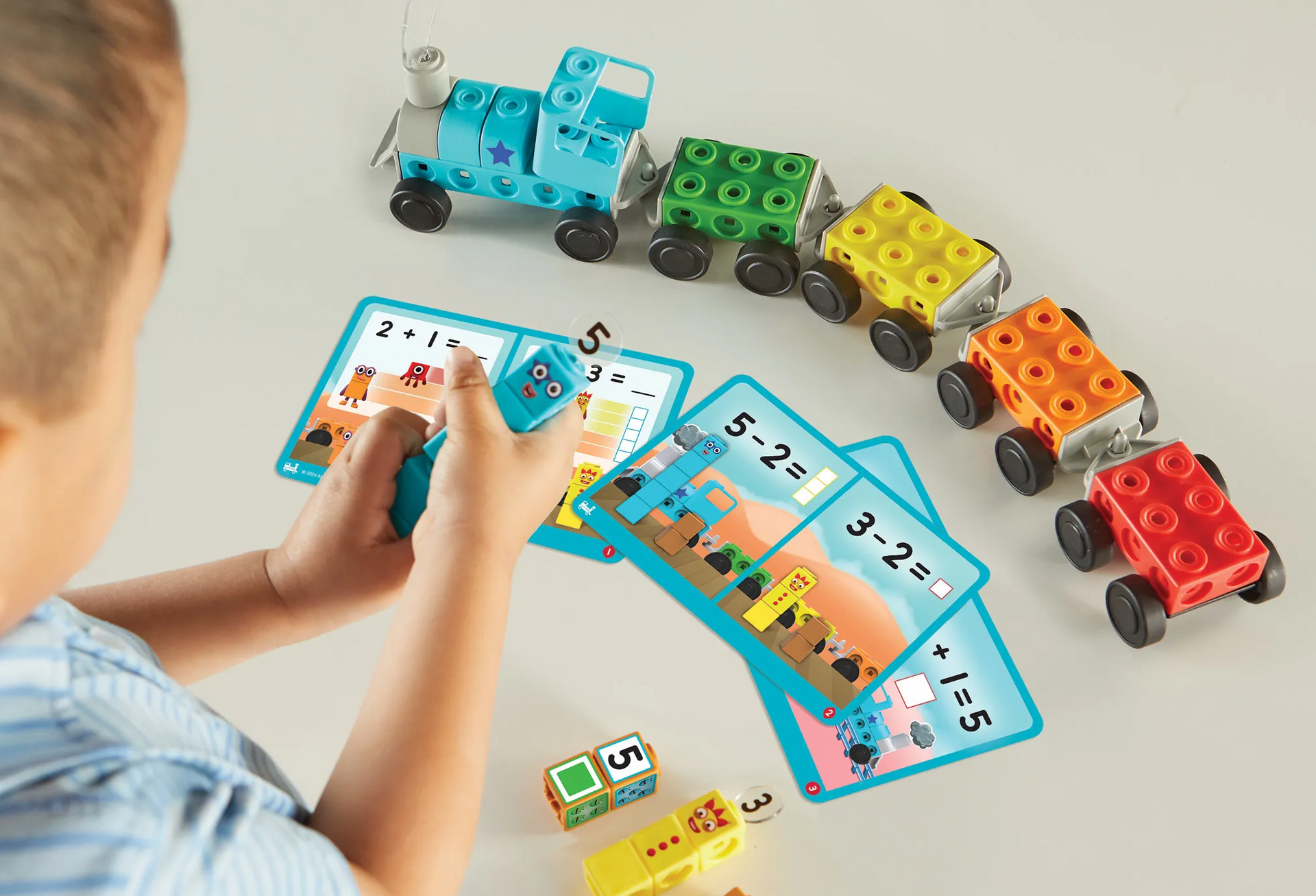
🧸 Use toys or building blocks to understand quantities
Number sequence concepts
Don’t just ask your child to memorise:
1 2 3 4 5 …
Instead, ask:
👉 What comes after 7?👉 What comes before 10?
If they can’t answer, it means they’re just memorising.
Countdown skills
Give your child plenty of practice with:
10 → 9 → 8 → 7
This is actually the basis of subtraction.
🏆 Ultimate Comparison of the Three Programmes
| Course type | Best Age | Key skills | Who it’s suited to |
|---|---|---|---|
| Abacus arithmetic | Ages 6+ | Calculation speed, patience and memory | A focus on speed |
| Olympiad Maths or English Olympiad Maths | Ages 5+ | Logical Thinking | Gifted or highly motivated |
| Maths Play for Young Children | Ages 3–6 | Number Sense | Most young children |
🧸 Learn maths with visual aids
❤️Whether it’s the Montessori Method or the Common Core State Standards
all emphasise one important idea:
Maths must be made visible
Because abstract concepts are difficult for children to understand.
It’s like if I said:
“Morepork”
Many adults can’t even imagine what it looks like, so we shouldn’t blame children for not understanding.
That’s why children should go through three stages when learning maths:
1️⃣ Concrete (Objects): Use learning aids, blocks and cards
2️⃣ Visual: Shapes or pictures
3️⃣ Abstract: numbers and equations
This is also commonly used in maths education around the world:
CPA Learning Model
✨ A simple example: how mathematical thinking solves a problem
❤️For example:
8 + 8 = ?
Children can split 8 into:
5 + 3
Becomes:
(5 + 3) + (5 + 3)
Children quickly see:
5 + 5 = 103 + 3 = 6
The answer is:
16
This method is actually:
👉 Number decomposition
🚀Here’s another question:
16 − 9 = ?
You can use simplifying:
16 = 10 + 6
Subtract 6 from both sides:
16 − 6 = 1009 − 6 = 03
The equation becomes:
10 − 3 = 7
Once children understand the concepts, they’ll naturally calculate faster.
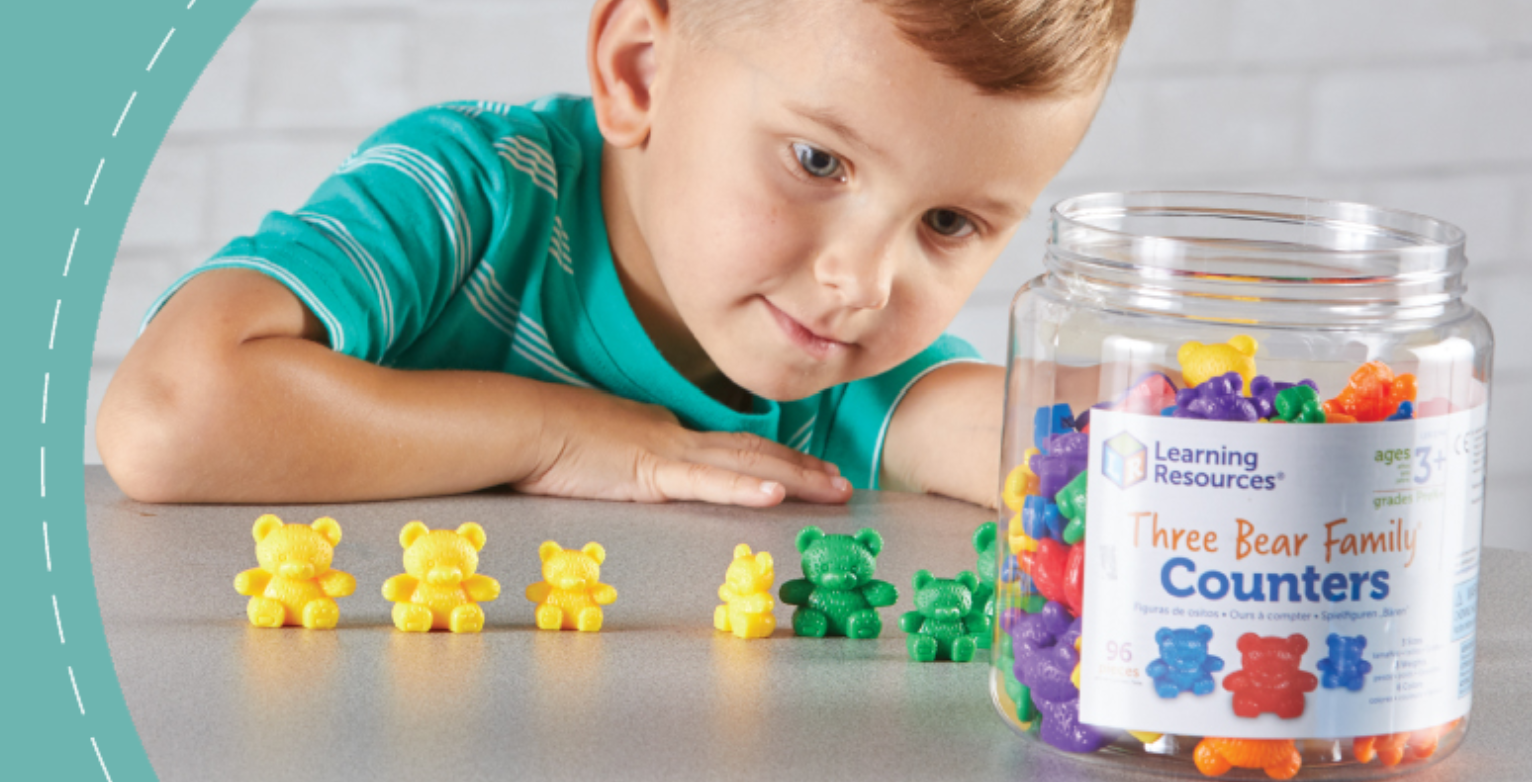
🎲 The best maths learning resource for young children is actually “play”
When children learn maths for young children, the most important thing isn’t how impressive the materials are, but:
Whether your child is willing to learn.
Effective learning methods include:
🎲 Math Board Games🧩 Puzzle Games🛒 Shopkeeper Role-Play🎥 Math Videos📱 Math Apps
When children think about numbers through play, math becomes fun instead of stressful.
🏆 Maths competitions for young children: give your child a goal
Many parents worry:
“Should my child take part in maths competitions?”
Competitions aren’t just about winning medals. They’re about:
✔️ Give your child a goal✔️ Boost motivation to learn✔️ Build confidence
Many children enter their first competition just for fun, and end up performing better.
Some children even discover their own interest and talent in math.
🎲 A fresh approach to maths for young children: maths can be lots of fun
🎉 Many children are afraid of maths, but often they simply haven’t found the right approach yet.
What if maths became:
🎲 Games🧩 Challenges🧠 Thinking
Children are often completely absorbed.
For example, the Active Math Player maths game course:
Every lesson uses games to teach maths concepts.
Our Three-Step Learning Method
🎧 Listen to the game rules and build concentration
🎲 Let's Play Build reaction and problem-solving skills through games
🎯 Report Share strategies and thought processes
Children learn more than just maths. They also:
✔️ Develop logical thinking✔️ Strengthen communication skills✔️ Build confidence in learning
📌 What’s the Difference Between Abacus and Mental Arithmetic?
Many parents confuse abacus calculation with mental arithmetic, but they’re actually very different:
| Item | Abacus | Mental Maths |
|---|---|---|
| Tools | Real abacus | Mental imagery |
| Calculation methods | Bead-moving | Visualisation |
| Key takeaway | Procedural Skills | Abstract thinking |
🌟 Olympiad Maths Success Story: A Fidgety Child Becomes a North American Maths Champion?
Many parents worry: “My child can’t sit still. Does that mean they’re not suited to learning maths?”
But this real-life Olympiad maths case challenges that assumption: a girl who started learning at age 3:
- 🌀 Full of energy and wildly imaginative
- ⏳ Concentration is often affected by mood
- 🤹 Sometimes they only just manage to finish the tasks in class
With the right mathematical thinking training, however, she gradually blossomed into a little Olympiad maths star:
- 🥇 Placed No. 1 in a North American maths competition
- 🏆 Award-winning in multiple international maths competitions
- 🎓 Accepted into a prestigious school
✨How did she go from a “mischievous child” to an Olympiad maths champion?
👉 Click to read the full Olympiad Maths case study and discover the key learning insights.
🎏 Kumon vs. math competitions: Which is right for your child?
If your child’s maths results are average, should they do more practice?
If your child enjoys maths, does that mean they have to study Olympiad maths?🧠
In fact, Kumon, Olympiad Maths and preschool maths games classes all develop different skills!
🔢 Kumon Maths
- Focuses on repetitive practice
- Builds calculation speed and fluency
🧩 Math competitions
- Focuses on logic, reasoning and problem-solving
- It’s not just about “calculating quickly”—it’s about “knowing how to work it out”
🎲 Maths Play Classes for Young Children
- Develop an interest in maths, and build maths application and problem-solving skills through Board Game
- Especially suitable for younger children or those with little interest in maths
👉 But here’s the most interesting part: some children who seem not to like maths may not have a “maths ability” problem at all…
💡 How can you tell whether Kumon, Olympiad Maths or maths games are best for your child, based on their personality, age, maths ability and learning habits?
👉 Further reading: “Kumon vs. Olympiad Maths: Which Maths Programme Is Right for Your Child?”
🧠 What Is Number Sense? Why Do Some Children Pick Up Maths So Quickly?
Many parents think being good at maths means calculating quickly and doing lots of questions. But the key is whether a child has developed number sense. So, what is number sense? Put simply, it’s a child’s intuitive understanding of the size of numbers, the relationship between numbers and quantities, and how calculations change.
Parents can also build their child’s math foundations at home with just 10 minutes of number-sense practice a day, for example:
- 🧸 Use real objects to understand the relationship between numbers and quantities (number sense for young children)
- ➕ Practise number sense questions that ask you to find the missing number
- 🎲 Build understanding through fun number sense games
These methods are more effective than drilling alone, and help children understand maths through play.
But many parents don’t know about a simple number sense game that takes just a few minutes and can improve both addition and subtraction understanding and calculation skills…
👉 What is this method? See the full demonstration in the article.
🧮 Mental Arithmetic vs Olympiad Maths vs Maths Classes for Young Children | A Common Mistake Parents Make
When choosing a maths programme for their child, many parents start by asking:
👉 Abacus or Olympiad maths—which is better?
But the three types of programmes actually take completely different approaches:
- 🧮 Abacus Mental Arithmetic: Improve Calculation Speed and Concentration
- 🧠 Math competition courses: Build logical reasoning and problem-solving skills
- 🎲 Preschool Maths Classes: Building Number Sense and Mathematical Understanding
Children who start Olympiad maths too early can easily become discouraged; and simply drilling abacus calculations may not help them truly understand maths concepts.
👉 Read the full comparison guide
👶📚 Maths for young children is about more than just “counting”!
Many parents think maths for young children is just about learning numbers, but maths skills involve far more. When children build a strong maths foundation at an early age, they’ll find learning maths much easier in the future.
As children develop their maths skills, they are building a range of important abilities, such as:
- 🔢 Number concepts: understanding numbers and quantities
- ⚖️ Understanding quantity: comparing more and less, longer and shorter, taller and shorter
- 🔷 Spatial Reasoning: Recognising shapes and spatial relationships
- 🧠 Logical thinking: sorting, ordering and reasoning
Research has also found that when children engage in mathematical thinking and calculations, several areas of the brain are activated simultaneously, suggesting that maths training can boost overall thinking skills.
But what many parents don’t know is:
👉 Children aged 3, 5 and 7 actually have very different levels of mathematical development!
What maths concepts should children learn at different ages? Many parents are surprised by what they discover.✨
👉 Read the full guide: A New Approach to Maths for Young Children
🧠 What Age Should Children Start Olympiad Maths? Many Parents Are Asking the Wrong Question
Many parents ask: ❓ What age is best for children to start learning Olympiad maths? ❓ Will it be too difficult? Could it affect their interest in maths?
The key isn’t just “what age to start”—it’s whether your child has developed number sense. When children can understand quantities and simple reasoning through play, they’re ready to explore math competitions.
👶 Common learning path:
- 🎲 Ages 3–4: Build number sense through math games
- 🧩 Ages 4–6: Olympiad Maths Games and Logic Training
- 🧠 Ages 6 and up: Structured Olympiad Maths Courses
Good Olympiad maths learning isn’t about endlessly tackling difficult problems. It’s about developing:
✨ Logical Thinking✨ Problem-Solving Skills✨ Focus and Patience
But many parents overlook one important question:
⚠️ Starting calculation drills too early may actually hinder maths understanding.
👉 Should your child learn maths or Olympiad Maths first? What is the ideal age to start? The answer may surprise many parents.
🧩 Can Kindergarteners Take on Olympiad Maths? Try These K2 & K3 Questions!
Many parents think children should wait until primary school to start Olympiad Maths, but many K2 or K3 children are already ready to try simple Olympiad problems. The key is not calculation, but developing logical reasoning and problem-solving skills.
In this K2 & K3 Olympiad maths questions article, you’ll see how children learn to think through fun questions:
- 🦒 Picture comparison question: compare the number of animals and learn to “think in pairs”
- 🧠 Logic puzzle: Learn to organise information using tables or diagrams
- ⚖️ Understanding Addition and Subtraction: How Numbers Relate to Each Other
- 🎯 Problem-solving strategies: techniques such as drawing tables, trial and error, and estimation
These questions aren’t just about arithmetic—they build children’s number sense, logic and higher-order thinking skills step by step.
✨ Many parents have discovered: even kindergarten children can use “reasoning” to solve maths problems!
👉 However, one wedding logic puzzle in particular can stump even many adults the first time they see it…
If you’d like to see how K2 & K3 children work out the answers step by step, and download practice questions and video explanations for free,
We recommend reading: 《K2 & K3 Olympiad Maths Questions: Free Downloads + Video Solutions》 👀
Once children have developed a solid number sense, many parents consider introducing them to Olympiad maths training. To learn how Olympiad maths develops children’s logical thinking and problem-solving skills, read our “Olympiad Maths Learning Guide: The Complete Learning Path from Number Sense to Competitions”.
Other Articles:
- What is math competition training, and why are more parents enrolling their children? Learn about the benefits, the right age to start, and available courses.
- 🎯 Abacus vs Olympiad Maths vs Maths Play Classes for Young Children | A Must-Read Comparison Guide for Parents 🎯Which maths class is best for young children? A Complete Guide to Play-Based Maths Classes (Parents Must Read)
- [What Is Number Sense?] A Must-Read for Parents | 5 Practical Tips + Number Sense Games to Boost Your Child’s Maths Skills
- 🎯 Which maths class is best for young children? A complete guide to play-based maths classes (A must-read for parents)
- 🚀 Aryanna, who got into Diocesan Girls’ School|How did this gifted 3-year-old become No. 1 in North America?
- What Is English Maths? A Complete Guide to Its Benefits, Primary School Questions and Practice Exercises 🧠✏️
- International School Maths|Hong Kong’s Only English-Medium Olympiad Maths|International School Math
- 🌟The Path to Mathematical Excellence at Harrow International School Hong Kong: Brendan’s Story|The Key to Talent and Nurture
- [Olympiad Maths Questions] Download free Olympiad maths papers + video explanations | Free Olympiad maths practice for Primary 1, 2, 3 and 5
- [Parent-Child IQ Puzzles] 2026 Children’s IQ Puzzles | IQ Puzzles for Primary Schoolers + Challenging IQ Puzzles to Get Kids’ Brains Working!
- Is your child struggling with maths? 5 ways to build number sense and strengthen the fundamentals