
🎏Kumon vs Olympiad Maths: Which Maths Course Is Right for Your Child? A Comparison of Kumon, Olympiad Maths and Maths Play Classes for Young Children
Updated: 17/02/2026
“What’s the difference between Kumon Maths, Olympiad maths and maths playgroups?”🤔
Many parents want their children to do well in maths, but when choosing a maths course, they often face the same question: should they choose Kumon, Olympiad maths or maths play classes for young children?
In fact, each of the three courses has a different learning approach and training goals, and is suited to different children.
If your child needs to strengthen their maths foundations, building calculation skills may be the priority. If they enjoy challenges and problem-solving, Olympiad maths may be a better fit. If they’re younger, or reluctant to engage with maths, games can spark their interest and provide a more natural starting point.
🔢 What Is Kumon Maths?
Kumon’s learning method dates back to the 1950s. Its founder, Toru Kumon, wanted to help his own child improve their maths skills, so he developed a learning approach based on gradual progression, repeated practice and independent learning.
One of the most distinctive features of Kumon Maths is that it helps children gradually build calculation speed and fluency through extensive practice.
For example:
1 + 1 → 2 + 1 → 3 + 1 → 4 + 1 → 5 + 1 → ……
Children master one area before gradually moving on to the next level.
Kumon therefore focuses more on:
- 🧮 Basic Calculation Skills
- 🔁 Repetition and Fluency
- ⚡ Calculation speed
- 📈 Step-by-step Progression
- 👦 Develop independent learning habits
For children who are disciplined and willing to practise every day, but still need to strengthen their maths foundations.
🎲 What Are Maths Play Classes for Young Children?
Our maths playgroup for young children is different from the traditional approach of sitting still and doing maths worksheets.
It brings mathematical concepts into games, stories, characters and board games that children are familiar with, so they can explore numbers, quantities, addition and subtraction, logic and problem-solving as they play.
For example:
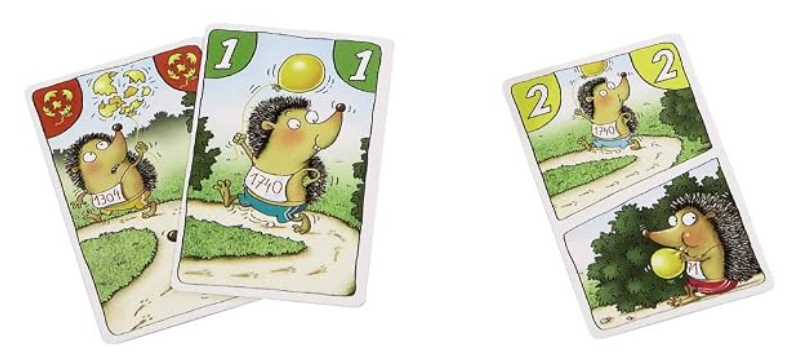
🦔 Three little hedgehogs are taking part in a race.
Each little hedgehog is holding a balloon.
🎲 Roll a “1” and the hedgehog moves forward 1 step.
But if they draw a “quill”, they can pop another hedgehog’s balloon.
🎈 After the balloon pops, roll a “1” and the little hedgehog has to take one step backwards!
Children are learning more than just how to play.
They need to understand:
Numbers → Quantities → Rules → Move Forward/Back → Strategies → Outcomes
Mathematical concepts emerge naturally through play.
Games can also include:
- 🤝 Teamwork
- 🗣️ Communication and Social Skills
- 🎯 Strategic Thinking
- 😆 The excitement of winning and losing
- 💪 Coping with failure and setbacks
- 🧠 Apply Maths Concepts
For young children, this approach can make “maths” more than just numbers on a worksheet.
🧠 What is Olympiad maths?
Olympiad maths isn’t just about “calculating faster”; it focuses on Problem Solving Math.
Olympiad maths problems often involve reasoning, logic, estimation, patterns and multistep thinking. Children can’t solve them simply by memorising one type of question; they need to think:
“What do I already know?”
“What is the question really asking?”
“What are some ways to solve it?”
For example:
🐸 Little Frog
Hop = 2 steps
Step = 1 step
Jump = 3 steps
If the little frog does Hop, Step and Jump, how many steps will it take altogether?
On the surface, it’s just simple addition, but children first need to understand the rules of the question, then combine the different pieces of information.
Olympiad maths focuses more on:
- 🧩 Problem-solving skills
- 🧠 Logical reasoning
- 🔍 Analytical skills
- 💡 Apply Maths Flexibly
- 🚀 Multistep thinking
- 🎯 Ability to tackle unfamiliar problems
For
*Dislikes repetition, enjoys challenges,
Loves asking “Why?”
Children who ask “What if…?” often find these kinds of maths problems more engaging.
⚖️ Kumon vs Olympiad Maths vs Maths Playgroups for Young Children: What’s the Difference?
| Course | Main approach | Key skills | Learning Approach | Whether extensive repetition is needed | Problem-solving | Enjoyment | Suitable for younger children | Suitable for children who are reluctant to engage with maths |
|---|---|---|---|---|---|---|---|---|
| Kumon Maths | Repetitive Practice | Calculation and fluency | Linear, gradual progression | ⭐⭐⭐⭐⭐ | ⭐ | Depends on the child | Depends on the child | Depends on the child |
| Olympiad Maths or English Olympiad Maths | Problem-solving | Logic and Reasoning | Multi-step problem-solving | ⭐⭐ | ⭐⭐ ⭐⭐ ⭐ | ⭐⭐ ⭐⭐ | Depends on the child’s level | Depends on the individual |
| Maths Play for Young Children | Learning Through Play | Interests and Applications | Game-based scenarios | ⭐ | ⭐⭐ ⭐⭐ | ⭐⭐ ⭐⭐⭐ | ⭐⭐ ⭐⭐⭐ | ⭐⭐ ⭐⭐⭐ |
👧👦 Which Maths Course Is Right for Your Child?
Rather than asking “Which is the best?”, it’s better to ask:
“What does my child need most right now?”
👦 Need to strengthen their maths foundations, but willing to practise every day?
Consider Kumon.
If your child is disciplined and willing to build calculation skills through repetition, Kumon Maths can help them steadily develop a strong foundation❤️
🧠 Love a challenge and not afraid of tough problems?
Consider Olympiad maths or English Olympiad maths.
If your child has mastered basic calculations and enjoys “IQ puzzles”, brainteasers and challenging questions, Olympiad maths can help them apply their maths knowledge to unfamiliar problems.
Maths talent isn’t always reflected in calculation speed. It may show in how a child tackles a problem they’ve “never seen before” 🚀
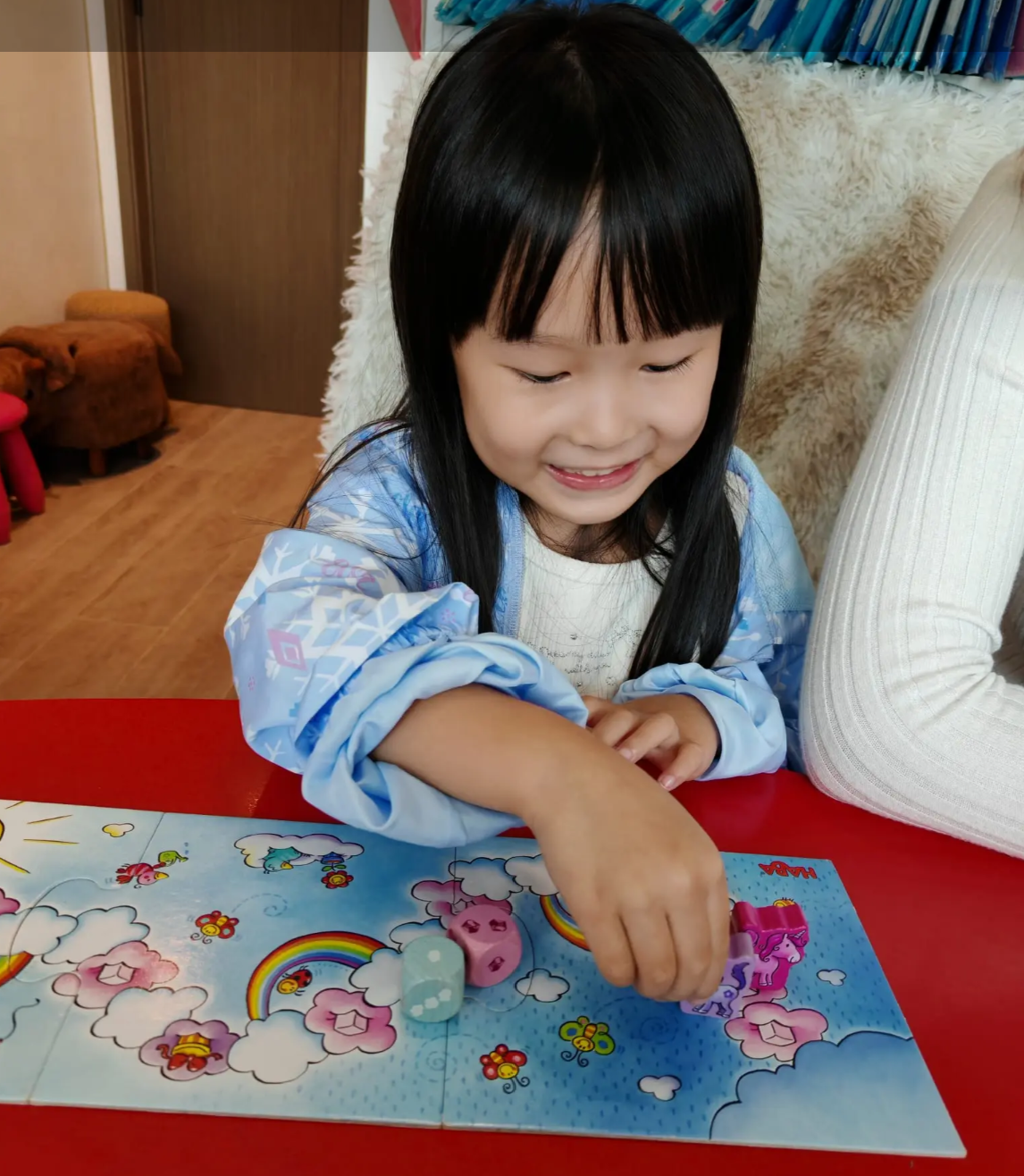
🎲 Is your child young, or reluctant to learn maths?
You can start with a maths playgroup for young children.
For young children, “enjoying maths first” can sometimes matter more than “doing lots of maths problems first”.
Through colourful board games, stories and play, children can first build:
“Maths is actually so much fun!”
Once children become interested in numbers, more challenging mathematical concepts can be introduced gradually, making learning feel more natural.
🚀 Kumon vs Olympiad Maths: It’s Not Necessarily an Either-Or Choice
Many parents search for “Kumon vs Olympiad Maths”, but the two don’t necessarily have to be treated as completely opposing choices.
Because:
Kumon Maths can build fluency, while Olympiad Maths develops problem-solving skills.
Once a child has mastered basic calculation skills, they can gradually move on to more challenging problems.
For young children, you can even start with maths games to spark their interest before gradually moving on to more structured learning.
So what really matters isn’t just:
❌ “Which course is the best?”
Instead:
✅ “Which learning approach best meets your child’s needs right now?”
🌟 Maths Doesn’t Have to Start with Worksheets
Some children run away at the sight of a worksheet, but sit straight down when they see a Board Game.
Some children don’t enjoy repetitive calculations, but love solving puzzles.
Some children also enjoy challenging themselves every day and feel a real sense of satisfaction when they see a stack of practice sheets.
Different children can start their maths learning in different ways.
Kumon, Olympiad maths and maths play classes for young children each develop different skills.
Parents can start by observing their child:
👉 Need to strengthen their foundations?
👉 Do they enjoy problem-solving?
👉 Or do they need to build an interest in maths first?
With the right approach, children don’t have to be pushed to learn maths.
When children start to find maths fun, their motivation often shifts from “I have to do this” to “I want to play—I want to find out the answer.”
Other Articles:
🧠 What is Olympiad maths? Why are more and more parents enrolling their children?
🌟 Olympiad Maths Success Story: A Fidgety Child Becomes a North American Maths Champion?
🧮 Mental Arithmetic vs Olympiad Maths vs Maths Classes for Young Children | A Common Mistake Parents Make
🌟 Olympiad Maths Success Story: How a Harrow Student Found Their Own Pace in Maths
📘 What’s so good about Maths in English? What many parents overlook…
🧩 Practising Olympiad Maths Problems: A Key Step in Building Your Child’s Maths Skills