What is number sense? A must-read for parents: 5 practical methods number sense games to easily improve children's math skills.
Publication date: 15/02/2026
Many parents ask, "What is number sense?" Number sense isn't simply about counting speed; it's a child's intuitive understanding of "number size, the relationship between numbers and quantities, and operational concepts." Traditional Hong Kong education emphasizes "speed and accuracy," involving extensive practice and memorizing formulas. While this may be effective in the short term, in the AI era, speed alone is no longer an advantage. What truly helps children learn math well in the long run is establishing a strong number sense, allowing them to truly "understand numbers," rather than simply "memorizing answers."
By spending just 10 minutes a day training your child's number sense, through simple and fun number sense games and everyday activities, your child's math skills can improve naturally.
How to cultivate children's number sense
1. The first step in developing number sense: Understanding the relationship between "number" and "quantity" (Suitable for: young children's number sense)
The most basic number sense comes from "visible quantities". For example, prepare a simple balance scale and place different numbers of building blocks or teddy bears on each side, allowing children to directly observe which side has more and which side has less. This type of activity is a classic "number and quantity lesson plan", which is particularly suitable for building children's number sense.
👉 Key point: It's not about memorizing 5 > 3, but rather "seeing that 5 is more than 3".
2. The second step in developing number sense: Missing Addend
For example, the question: 3 ? = 8
🐻🐻🐻
🐻❄️🐻❄️🐻❄️| 🐻❄️🐻❄️🐻❄️🐻❄️🐻❄️
You can place 3 bear cubs on top and 8 on the bottom, and let the child gradually add bear cubs to the left side until there are the same number on both sides. They will then naturally understand that "5 is missing".
These kinds of activities are more effective than simply doing number sense problems because children "see the process" rather than just memorizing the answers.
3. The third step in developing number sense: Part-Whole
For example, if there are 6 bear cubs, and 2 are taken away, then 4 are left:
🧸🧸 🧸🧸 >🧸🧸 6 − 2 = 4
Put 2 more back:
🧸🧸 🧸🧸 <🧸🧸 4 2 = 6
This is the most important core concept of number sense: 👉 A number can be broken down or combined.
This concept is crucial for learning addition, subtraction, multiplication, division, fractions, and algebra in the future.
4. The fourth step in developing number sense: improving calculation speed (but not rote calculation).
The "speed" of number sense doesn't mean becoming a human counting machine, but rather understanding something at a glance.
For example, using the Domino game:
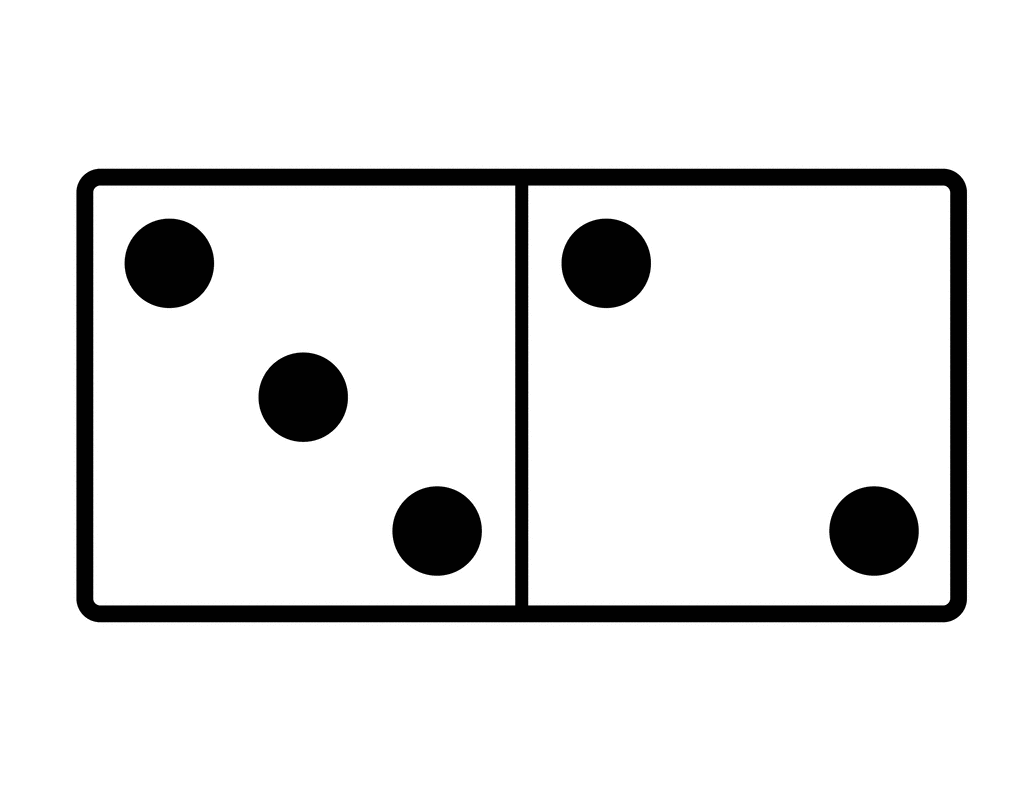
Seeing the 2:3 ratio in Domino, children will naturally know that 2 3 = 5. Conversely, they can also ask: If 5 takes away 2, how much is left?
This method is more intuitive, more interesting, and more in line with the true spirit of number sense training than traditional abacus mental arithmetic.
5. The fifth step in developing number sense: Learning math through number sense games.
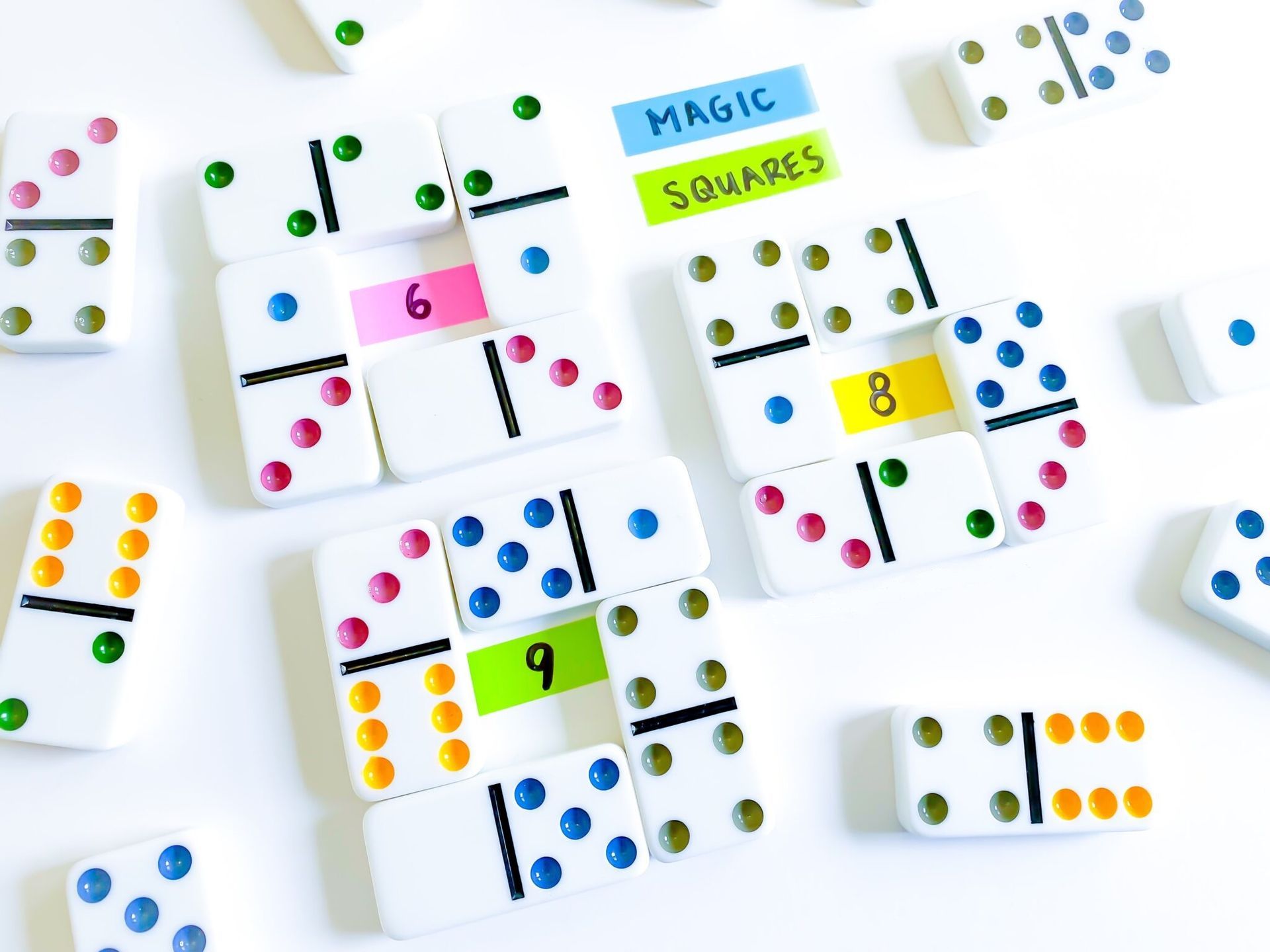
How to play this parent-child game: One player places a Domino, for example, in a 3:2 ratio, and says the number 6. The other player then takes a Domino to make a 6, for example, in a 4:2 ratio (2 4 = 6).
These number sense games have an appealing "want to finish" element, and children can unknowingly complete a math lesson while playing them, which is much more motivating than doing worksheets.
What is number sense in English?
If you search for English textbooks, number sense is usually called:
1.Numeracy
2.Number Sense
Many international schools and foreign curricula place great emphasis on number sense because it is the "foundation" of mathematical ability.
Do I need to take a number sense class?
If parents are busy with work or don't know how to design activities, enrolling their children in a professional number sense class is a good option. A good number sense class doesn't just involve doing problems; instead, it helps children develop genuine mathematical intuition through games, teaching aids, and interactive activities.
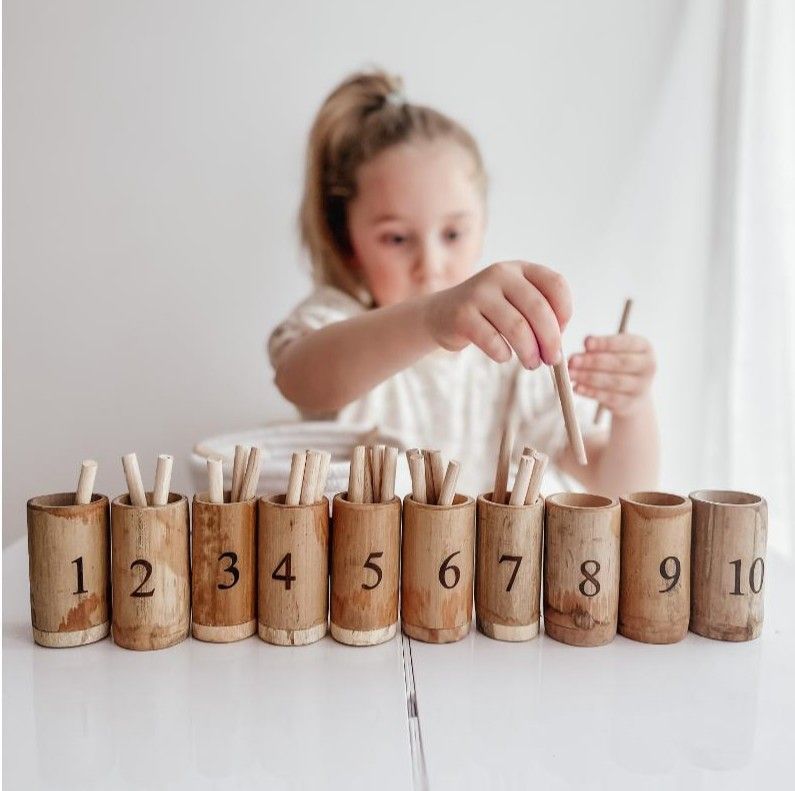
In conclusion: Number sense is not a talent; it can be trained.
Returning to the initial question: "What is number sense?" Number sense is not an innate intelligence, but an ability accumulated through the right methods.
By spending just 10 minutes daily on number sense training, combined with simple number sense problems and fun number sense games, and with a little patient guidance, both preschoolers and elementary school students can gradually build a solid foundation in mathematics, truly achieving—
👉 If you can read numbers and understand mathematics, you will naturally learn faster.
Other articles:
🧠 What is number sense? Why do some children learn math so quickly?
👶📚 Early childhood math is more than just "counting"!
🧠 At what age should parents start learning advanced math? Many parents are actually asking the wrong question.
🧩 Can kindergarteners take on advanced math challenges? Try these K2 & K3 advanced math problems!
🧮 Abacus Mental Arithmetic vs. Olympiad Math vs. Early Childhood Math Courses | The Most Common Mistake Parents Make